
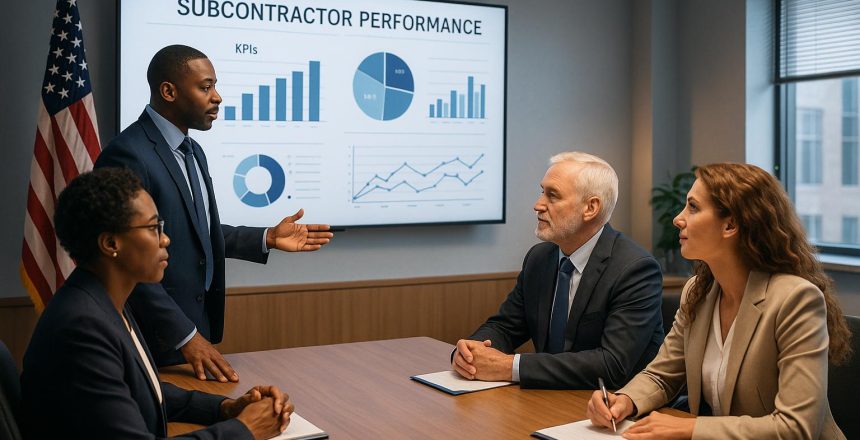
Tracking subcontractor performance in GSA contracts is non-negotiable if you want to stay compliant and secure future federal contracts. Here’s what you need to know upfront:
- Why it matters: Federal regulations like FAR and CPARS require strict performance monitoring. Poor oversight can jeopardize your eligibility for future contracts.
- Key requirements: Use tools like CPARS, ESRS, and SAM.gov to document quality, timeliness, cost control, and small business compliance.
- How to track effectively: Establish clear performance metrics, include them in a Performance Work Statement (PWS), and document everything.
- Fixing issues: Spot problems early, create a Corrective Action Plan (CAP), and act quickly to avoid compliance risks.
Proper tracking safeguards your business, ensures compliance, and builds a strong reputation in federal contracting. Missing these steps could cost you future opportunities. Ready to dive deeper? Let’s break it down.
Subcontract Reporting
GSA Subcontractor Performance Requirements You Must Know
Understanding the rules governing subcontractor performance is essential for staying compliant with federal standards. These guidelines set clear expectations that can make or break your success with a GSA contract.
Federal Regulations and Standards That Apply
The Federal Acquisition Regulation (FAR) serves as the cornerstone for federal procurement processes, outlining how agencies purchase goods and services using Congressional funds. A key element to be aware of is FAR clause 52.219-14, titled "Limitations on Subcontracting." This clause establishes limits on the percentage of work that can be subcontracted to entities that do not share the same small business designation as the prime contractor. It specifically applies to contracts awarded to small businesses, sole-source agreements, and orders exceeding the simplified acquisition threshold.
Setting Up Performance Metrics and Deliverables
Clear metrics and well-defined deliverables are essential for managing subcontractors under GSA contracts. Without these, it’s impossible to accurately measure performance or ensure compliance.
Creating Clear Performance Metrics
Once you’ve reviewed federal requirements, it’s time to establish precise metrics for evaluating subcontractor performance. Focus on four key areas: quality, timeliness, cost control, and small business compliance. Each metric should be specific, measurable, and directly tied to the contract’s objectives.
For quality, set measurable benchmarks like "zero critical defects" or "95% customer satisfaction." In professional services contracts, you might require all deliverables to pass a technical review within two business days of submission.
Timeliness metrics should go beyond final deadlines. Include interim milestones to monitor progress. For example, in an IT services contract, you could set a target for 90% of help desk tickets to receive an initial response within four hours and full resolution within 24 hours.
Cost control metrics help prevent budget overruns and ensure financial discipline. These could include staying within 5% of budgeted costs for each project phase or maintaining labor rates within the approved GSA Schedule pricing. Track both direct costs and any savings your subcontractor achieves.
For small business compliance, monitor subcontracting percentages regularly. If the contract requires 23% of the work to go to small businesses, track this monthly to ensure you meet the target.
Make your metrics as clear and quantifiable as possible. Instead of vague terms like "timely delivery", specify something like "delivery within five business days of the agreed milestone date." This creates clarity and provides actionable data for performance reviews.
Using Performance Work Statements (PWS) to Set Expectations
After defining your metrics, formalize them in a Performance Work Statement (PWS). This document lays out tasks, deadlines, and performance standards in detail.
Break the contract’s scope into specific tasks aligned with your metrics. For example, in a facilities maintenance contract, your PWS might state, "All HVAC systems must maintain temperatures within 2 degrees of the set point 95% of the time, with monthly reporting required."
Include detailed documentation requirements in the PWS to ensure thorough performance tracking. Specify what reports are needed, how often they should be submitted, and in what format. This could include weekly progress updates, monthly financial reports, or quarterly compliance certifications.
Your PWS should also outline corrective action triggers. Define clear thresholds for performance issues that require immediate attention. For instance, "failure to meet quality standards on two consecutive deliverables will result in a mandatory corrective action plan within 10 business days."
Establish communication protocols to manage issues effectively. Specify check-in schedules, report submission timelines, and escalation procedures. Identify who needs to be notified when problems arise and set deadlines for addressing them. This helps prevent minor issues from escalating into major compliance violations.
Ensure your PWS aligns with the broader contract terms and any GSA Schedule requirements. Reference specific clauses related to performance standards, including small business subcontracting and federal compliance obligations.
Finally, build accountability into your PWS. While financial incentives are often not an option in government contracts, you can include non-monetary rewards like preferred vendor status for future contracts. On the flip side, outline steps for addressing consistent underperformance, including the potential replacement of the subcontractor.
Tools and Methods for Tracking Performance in GSA Contracts
Once you’ve established your metrics and Performance Work Statement (PWS), the next step is leveraging federal digital platforms to simplify tracking and reporting. These platforms serve as the foundation for maintaining detailed and accessible performance records.
Key Tools for Performance Tracking
- CPARS (Contractor Performance Assessment Reporting System): This tool is essential for documenting performance evaluations that play a critical role in future source selection decisions.
- ESRS (Electronic Subcontracting Reporting System): Ideal for ensuring subcontracting compliance, ESRS simplifies reporting by offering analytical insights and eliminating the need for paper submissions.
- SAM.gov: This platform integrates the Federal Awardee Performance and Integrity Information System (FAPIIS), offering a centralized hub for managing entity information.
- GSA Focus: A comprehensive tool for managing GSA contracts, it handles everything from document preparation to ensuring compliance with federal requirements.
Effective Monitoring Methods
To keep your performance on track, combining these tools with consistent monitoring practices is vital. Digital solutions not only streamline record-keeping but also provide real-time insights, helping you stay compliant and efficient at every step.
Fixing Performance Problems and Staying Compliant
When a subcontractor’s performance starts to lag, it’s crucial to act quickly to stay aligned with GSA requirements. Addressing issues promptly minimizes contract risks and keeps things on track. Here’s how to identify problems, document them effectively, and implement corrective measures.
How to Spot and Document Performance Problems
Performance problems don’t usually appear out of nowhere – they tend to build up over time. These issues might show up as missed deadlines, reduced quality, or failure to meet agreed-upon metrics. Regular evaluations using SMART goals (Specific, Measurable, Achievable, Relevant, Time-bound) are key to spotting these early on. Compare actual results against your benchmarks, and if you notice discrepancies, document them right away. The sooner you act, the easier it is to address the issue before it escalates.
Creating and Using Corrective Action Plans
Once performance gaps are identified, it’s time to create a Corrective Action Plan (CAP). This plan should include clear improvement goals, measurable outcomes, and reasonable timelines. Sit down with the subcontractor to go over the documented concerns and collaborate on the steps needed to fix the problems. A well-structured CAP with defined milestones makes it easier to track progress and hold everyone accountable. Also, be upfront about the consequences of failing to meet the agreed-upon targets.
What Happens When Subcontractors Don’t Comply
Non-compliance isn’t just a short-term issue – it can have lasting effects. It can negatively affect CPARS evaluations, which are critical for securing future federal contracts. Keeping detailed records of oversight and corrective actions not only protects your current contract but also demonstrates your commitment to compliance when it’s time for performance reviews. Staying vigilant helps safeguard both your reputation and your ability to win future opportunities.
Key Points for Tracking Subcontractor Performance in GSA Contracts
Tracking subcontractor performance in GSA contracts isn’t just about checking a compliance box – it’s about safeguarding your business and laying the groundwork for long-term success in federal contracting. With so much at stake, poor oversight can tarnish your reputation and shrink future opportunities. This is why setting clear performance expectations right from the start is critical.
Establishing clear expectations from day one is more than just a formality – it’s your playbook for success. Using key performance documents ensures that measurable standards are in place for both you and your subcontractors. These tools eliminate ambiguity, align everyone’s efforts, and create a shared understanding of what success looks like.
Leverage digital tools for proactive management. The right tools can shift your focus from reacting to problems to preventing them altogether. By collecting consistent data, you can identify trends early and address potential issues before they escalate. Regular performance reviews, guided by SMART goals, keep everyone aligned and focused on priorities that truly matter.
Underperformance isn’t just an inconvenience – it’s costly. It can lead to budget overruns, delays in schedules, and strained relationships with government agencies. Beyond the immediate impacts, poor evaluations can jeopardize your chances of securing future contracts.
Documentation is your safety net. Every performance review, corrective action plan, and compliance check contributes to a detailed paper trail. These records are invaluable when disputes arise or when performance is scrutinized during evaluations. They clearly demonstrate your commitment to quality and compliance, protecting your interests in the process.
Successful federal contractors understand that subcontractor management isn’t just a task – it’s a competitive edge. By consistently tracking performance, you’re not only meeting GSA requirements but also building a solid reputation that leads to repeat business and larger opportunities.
For businesses new to GSA contracts, expert guidance can make all the difference. GSA Focus offers specialized support to help you navigate these performance tracking requirements. Their expertise ensures your subcontractor oversight aligns with federal standards, protecting your investment and positioning you for success in federal contracting. With the right support, your subcontractor management strategy becomes a powerful tool for growth.
FAQs
What happens if subcontractor performance isn’t properly tracked in GSA contracts?
Failing to keep a close eye on subcontractor performance in GSA contracts can lead to some pretty serious consequences. Think contract termination, hefty financial penalties, or even being blacklisted from future federal contracting opportunities. Beyond that, poor oversight can mean missed deadlines, shoddy work, or failing to meet contract terms – issues that can derail a project and waste valuable government resources.
Staying on top of subcontractor performance isn’t just a good idea – it’s essential. Regular tracking helps ensure they meet expectations, follow compliance rules, and deliver real value to the government. Taking a proactive approach can save you from costly errors and help protect your reputation in the competitive world of federal contracting.
How do tools like CPARS and ESRS make it easier to track and report subcontractor performance?
Digital tools like the Contractor Performance Assessment Reporting System (CPARS) and the Electronic Subcontracting Reporting System (ESRS) make tracking and reporting subcontractor performance much easier by providing centralized, real-time platforms.
CPARS enables government officials to evaluate and document contractor performance in a way that promotes transparency and better decision-making. It goes a step further by incorporating feedback from both contractors and agencies, creating a more balanced and comprehensive evaluation process.
On the other hand, ESRS simplifies how subcontracting data is submitted and analyzed. By moving this process online, it cuts down on manual paperwork and boosts overall efficiency. These tools ensure performance data is not only accurate but also readily available for future contract evaluations, strengthening accountability and oversight in federal contracting.
What should I do if a subcontractor isn’t meeting performance standards in a GSA contract?
If a subcontractor isn’t meeting the performance metrics outlined in the Performance Work Statement (PWS), the first step is to regularly review their performance and document any shortcomings. Keeping detailed records of these issues is key. Open and honest communication is also crucial – sit down with the subcontractor to discuss the problems and work together to develop a corrective action plan aimed at resolving them.
Should the subcontractor’s performance remain unsatisfactory despite these efforts, it may be necessary to escalate the situation. This could include issuing formal warnings, suspending their work, or even terminating the subcontract, depending on the terms of your agreement. Be sure to follow the guidelines set forth in your contract and the Federal Acquisition Regulation (FAR) clauses. Throughout this process, maintain thorough documentation and ensure compliance with all applicable regulations to protect your decisions and actions. Proper oversight is essential to managing these challenges effectively.
Related Blog Posts
- How to Track GSA Contract Compliance
- How to Manage GSA Contract Performance
- Ultimate Guide To GSA Contract Performance Metrics
- How to Monitor Performance Risks in GSA Contracts